RSS

Tag Archives: buddhism

Interpependence

I was asked, as part of the Caring Committee, at my Unitarian Universalist Church (Unitarian Universalist Friendship Fellowship in Rockledge, Florida) to help create a service to introduce the committee and the idea of interdependence. To bring them to the idea and they were not alone, that asistance was available, and we were here to help. Needed, for a bunch of stalwart headstrong intellectials. I said yes, of course.

We planned. And planned. We even planned an exercise where toe whole congreagation formed a web with two skeins of beautiful yarn I purchased, which would then be made into art to hang in the fellowship hall.

One by one, folks dropped out. Weren’t going to be in attendance. Had an autistic meltdown. Visiting family.

I’ve experienced autistic meltdowns. But when do I get to just take two weeks to get oneself back together, to rest? While I have nothing but sympathy, really, I also wonder where the grit has gone. That may be unfair. I understand. Still,… “Ok, I got this.,” I said, the irony not being lost on me.

Let me know if you need help or want me to do a part, someone else said. No, that’s ok. I want to know that, when that Sunday comes, there are no loose ends. No suprises. No hiccups caused by someone who can’t show up for whatever reason. I was the one you wanted for a group project in school. I was not the one who ever wanted to do a group project.

I chose the readings. I chose the music. I’m in the choir as well, and chose songs that felt right for the subject, but also we’d enjoy singing. Two we could even play alonng with, opening with “Somos El Barco,” with two of us on ukuleles and our choir director picking on his guitar.

And here is the result, minus the, readings, houskeeping items, announcments, Joys and Concerns, and offertory,”You’ve Got A Friend,” and hymms, “Lean On Me,” and “The Oneness Of Everything.”

Welcome: Welcome, one and all. Whoever you are, however you are, whatever brings you here, welcome. If you have come in despair, welcome. If you have come in joy, welcome, if you have come in confusion or understanding, sadness or delight, welcome. If you have come with a hand to lend, welcome. If you have come with a hand in need, welcome. Welcome to all.

Let’s call up the children, if they would, to join us and light our chalice. The chalice is a symbol of peace and acceptance. And of safety. It is a symbol of acceptance and communion for those who are like us, and those who are unlike us. It is a symbol of light that calls to those who are in need, in want, in pain, and in danger. At one time or another, then, it calls to each of us.  

Chalice Lighting: “In the light of truth and in the warmth of love, we gather to seek, to sustain and to share.”

Opening words

Today’s service is brought to you by the letter I. I, for Interdependence. If you buy into the whole American mythos, you’d think it was only for the word Independent: The myth of rugged independence. And by the letter C. C is for Committee, which which we are replete, and C is for Caring. And, best of all, for Caring Committee. Could we have the folks in the Caring Committee stand up please. Would the chair of the committee raise their hand, please? 

What have others said about rugged independence? Joseph Campbell told us “The giant of self-achieved independence is the world’s messenger of disaster…” 

“The whole idea of compassion, Thomas Merton teaches us, is based on a keen awareness of the interdependence of all these living beings, which are all part of one another, and all involved in one another.” 

Only two weeks ago, many of us sat in the very room and listened to the nuns of Blue Cliff Monastery talk to us about what they called Interbeing. And our own seventh principle reminds us to “respect the interdependent web of all existence of which we are a part.”

When I was but in 8th grade, this is what I learned from Alan Watts, “We are not just a skin-encapsulated ego, a soul encased in flesh. We are each other and together we are the world.”

We often feel alone in this world. “We’re born alone, and we die alone,” We hear this, and we hear this a lot. And many of us have taken this, unfortunately, to heart.  But are we alone, really? We have an epidemic of loneliness in America. 

The surgeon general has raised alarms about this with a new study showing nearly 38 million Americans live alone and are subject to higher incidence of depression because they have no social networks. And, make no mistake, the epidemic is deadly. Not just suicide. No one who will know when our memory is failing, or to help us when we fall from a stepstool we should not have been on. No one to ask the doctor a question the patient may have been too overwrought to think of. Too overwhelmed to remember. No one to look forward to seeing, sharing time with, seeing a movie with, sharing a meal, walking alongside.

The myth of independence is forced into us with our milk. The myth of do it yourself, be your own person, no one is going to do it for you, pick yourself up by your own bootstraps. 

Alissa Quart discusses this very idea in her book Bootstrapped: Liberating Ourselves from the American Dream

Pick yourself up by your own bootstraps… was a joke. An absurdity. It’s a metaphor that refers to a task that is impossible to do. The phrase is believed to come from the German author Rudolf Erich Raspe, who wrote about a character who extracted himself from being mired in a swamp by pulling himself up by his own hair.

There was a fellow named Nimrod Murphree who, in 1834, claimed he was a fully self-made man. He also claimed to have invented perpetual motion. And he was being mocked thoroughly for saying so. “Probably Mr. Murphree has succeeded in handing himself over the Cumberland river, or a barnyard fence, by the straps of his boots,” wrote a newspaper column of the day. In the 18th and 19th centuries, the phrase was used to describe an impossible task. In the Racine Advocate, some ten years later, they said the governor must be trying to pull himself up by the bootstraps. Again, making fun of him, because you can’t really pull yourself up by your bootstraps. 

It was even used as sort of metaphysical joke with a psychologist in the 1860s writing that the attempt of the mind to analyze itself is analogous to the one who would lift himself up by his own bootstraps.

But today, we use the term to suggest that someone should handle their own problems, fix themselves, by themselves, for themselves.

Do it on your own, be that self-made person who handed themselves over the Cumberland with his perpetual motion machine. It has, unfortunately, ceased being a joke. 

Orson Wells reiterated “We’re born alone, we live alone, we die alone.” But he added, “Only through our love and friendship can we create the illusion for the moment that we’re not alone.” But Wells got it wrong. It is independence that is the illusion. No. one. goes. it. alone. No one can lift themselves up 

by their hair. No one. Not. one. of. us. 

Instead, we are the quaking aspen, which appear as individual trees, but are really one, joined by the roots. We are mushrooms, which pop up here and there, some solitary, some in groups, but all joined by the great mycelium network. None of us are alone. We do not come into this life, we come from life itself and are always part of life. We come from the earth and go back to it. As the apple tree apples, the earth peoples. Ant the earth, too, part of the whole. We are all in this together.

And that is what we are here for today. We are all, every thing, part of Indira’s net, which extends out infinitely, in all directions, all things a part of the net, all stones, all trees, apples, people, all beings. All that we believe is alive. All that we believe is not alive. Not one of us moves that it does not, in some way, affect all who live in the net. And, at each joint in the net, a glittering jewel which reflects the light from all the others. Your face, my face, the faces of those you love, and those you do not love. We are recursive images of all existence. We breathe in and out each other’s lives and we are built of those who came before us and what we leave will build those who come after. We are infinity.

How do we carry this into our everyday lives? How do we carry this into our congregation? Ask Thoreau, ask Emerson, ask Whitman. 

Ask the physicist, the botanist, the biologist. Ask the Buddhist. Hindu, shaman, witch. 

First, Interdependence poses a challenge to the idea of one-sided individualism, the belief that the individual is of primary importance and invites us to see that the whole, the community, our congregation, as equally important as the individual. Because the whole is contained within each of us. Because of compassion. And because it makes sense. “Logic clearly dictates the needs of the many outweigh the needs of the few.” Spock said that to Kirk in The Wrath of Kahn, as he sacrificed himself for his crew. Yes, I managed to quote Star Trek. To be fair, of course, it was Gene Roddenberry who wrote that, but that leaves it making no less sense.

And, as we are a part of the whole, interdependence is balance. Our own needs taken into account as we serve our greater community. 

Resting when we need, so we can keep going, so we can be there for others, in times of joy and in times of need. As a part of the whole, it is important we keep ourselves well, so we may help the whole survive and thrive. 

Interdependence allows us to see that we are not separate entities! Our well-being is mutual. Our present and future is shared. We truly are all in this together. 

And what do we gain by this? Greater compassion, yes. The feelings of awe, wonder, and profound gratitude, yes. But we also can enjoy a deeper sense of meaning and understanding. And it makes it easier to give. Easier to receive. Though many of us have quite a hard time receiving.

But those who receive also give. There is a gift in need, giving others the opportunity for service. Many long for an opportunity to be of service to others, but do not know what to do. Your need may, paradoxically, be a gift to others. 

Never underestimate the power of service, the interdependent nature of community, and the gifts that it can bring to that community. The growth, binding, strengthening it gives us the opportunity for. Ask. Ask for what you need. Your desire to self-reliance at all costs may be robbing others of chances to grow. Ask. Ask, and do not deny others the chance to help. Do not deny others the chance to help. 

Ask for assistance. Tell us your needs. It doesn’t mean you don’t know what you are doing. It doesn’t make you less. And, despite how you may feel, it doesn’t make you a fraud as an adult.  Amanda Palmer, in her book The Art of Asking, assures us  “The Fraud Police are the imaginary, terrifying force (for many) ‘real’ grown-ups believe – at some subconscious level – will use asking for help as real evidence that they have failed as a grown-up. But nothing could be further from the truth.” Asking means you know what your powers are, and are not. So, when in need, stand up and say, “I need help.”  Ask. 

And when we ask for help with gratitude to our community, it gives the community the opportunity to give with gratitude.  Do not deny that of others. 

Years ago, In my late 40’s, I was in need. I assure you it was not the first time. 

But it was the first time in my life I was alone. Or thought I was. The first time I faced an empty house IN MY ENTIRE LIFE. I ceased to function. Apart from letting out my dog, I barely moved. I needed help, but didn’t even know what to ask for. I barely spoke. A friend told me though, that she saw what the need was, and acted. And help came. Some I needed, some I didn’t quite, as I could not say WHAT I needed at that time, but even the “unneeded” giving gave me something I DID need -the knowledge that people loved me. People I didn’t even know. That love, from friends, from strangers, that service, kept me here, kept me from being destroyed. And kept me from destroying myself. 

Some two months later I cooked a meal for myself. I hadn’t done so in many months, though I certainly knew how. And I shared it with a friend, telling her I had no idea what my life would look like now, but was going to return to volunteering. Why, she asked? I said, without thinking, that when we don’t know how to help ourselves, the best thing we can do is help other people. If we all did that, no one would be in need. I rarely listen to my own advice, this this, I have stuck with and it has often gotten me through. When I do not know what to do for yourself, help somebody else. 

I think back now: What would not have gotten done if I had not been open to receiving help. Who would I not be here for now? Who would not be receiving now. Who can I help because I was given the help I needed when it was most desperate. Because people listened when I could not even speak. Because we are all in this together. 

This is the mutuality of real community. Meaning and purpose follow in its wake. The magic of interdependence. 

Never second guess yourself. We do not know what act of service will bear the most fruit, the sweetest, or most meaningful. It could be small, it could be large, but we do not know how large it may grow, or the beauty it may grow into. Do not wonder later if you could have helped. Do it. Service in itself is beautiful, no matter the size. It is never not good enough, never too small. The Buddhist author, monk and psychologist Jack Kornfield tells us to never say no to an impulse to service. 

We too often think them too small, or of too little consequence, or what we have to give is too little, but it is never the case. It is the nature of interdependence that all actions matter, reflect in all the glory that is our world, ripple and grow. 

Many of us here have gone without, done without, have been in need, and have been quiet. Many here have had a hand to offer, but none to take it. Many have needed a hand, but have never let anyone know. Pride, arrogance, the desire to “pull ourselves up by our own bootstraps,” perhaps. Or, maybe, we have swallowed the American myth of individual worth coming only from individual effort. From only the value of what we have produced.

What I ask you, today, is that you remember, we are here for each other, to serve, delight in, help, and protect, befriend, feed, listen to, and walk along with when our paths converge, wherever those paths lead. To speak up when you are in need, say something, write a note. To stand up when you know there IS a need, a challenge, a misfortune – yours, someone else’s, that we, as a congregation can address, assist with, diminish. 

We can share each other’s joys, and we can relieve each other’s sufferings. But only if we speak. Only if we know. 

And only if we stop seeing ourselves as a collection of individuals and, instead, as the connected, loving community we are. This, if anything, is the covenant we should pledge. 

Extinguish the Chalice

The Chalice is now extinguished, but may its light live on in the minds and hearts and souls of each of us. May you carry that flame with you as you leave this place and share it with those you know, with those you love, and most especially, with those you have yet to meet. So may it be.

 
Leave a comment

Posted by on March 19, 2024 in Culture, Religion, Social


Tags: , , , , , , , , , , , , , , ,

Four Names

I have four names. Not nicknames. I’ve never had a nickname. Yes, once a a friend of a friend insisted on calling me Ad, because, one must assume, adding the phonological onset of “um” was too much for her to add to “Ad.”  I refused to answer until the behaviour extinguished itself. A department head called me “Little Adam,” until I asked her not to. Her calling me this made little sense, apart from my height, because there was no other Adam and, hence, no need to distinguish me from a wholly hypothetical “Big Adam.” In grade school I wanted to be called Grasshopper. Despite my best efforts, this never caught on. Despite my best efforts, I also never learned kung fu. My sensei told me I roll like a sheet of plywood. 

Adam Ant did catch on, but I never saw a reason to answer to it.

My mother named me Adam Byrn Tritt. My mother told me Byrn meant bear in Welsh. It does not. Nor do I know why she’d want my middle name to mean bear. While Welsh makes sense, as it is where her father’s side of the family escaped to when expelled from Portugal, Byrn doesn’t mean anything in Welsh. Byrne, however,  with the added e, means “from the brook.” That isn’t helpful.  Byrn does mean raven, however, in Gaelic. As far as I know, this was not her intent, but my entire life I have had an affinity for that bird, the symbolism behind ravens, which crosses cultures, and have, in many ways, lived up quite well to what the raven symbolises. It comes from Bran, an Irish god, the chief god, the giant god, whose symbol is the raven. Some of my favourite art is that of the Northwest Tribes in their depictions of Raven, and some of my favourite stories are those of the creative, the trickster, Raven. The Raven is often misbehaving but never boring, and through his actions he brings necessary changes to the community. This, I feel, was not my mother’s intent.

Also not her intent was to have it misspelled. She sent an aunt, Aunt Anne, to go and give the information for my birth certificate. Confused, she spelled my middle name “Bern,” as though my mother had named me after a city in Switzerland, and that is how it is still on my ID, Social Security Card, Passport, and all government documents. Thank you, Auntie Anne.

My mother never called me Adam though. On occasion she called me her melonhead. But most of the time she called me Adamus.  Adam comes from the Hebrew “adamah,” for earth or soil, and came to mean man, thus Adam and Eve, from the Hebrew for “life.” Thus, Adam and Eve are Earth and Life. But, she told me, she didn’t name me after the Hebrew, but from the Greek, “adamantinos,” originally, and then through the Latin “adamantinus,” for unbreakable, unyielding. Adamus, she said, was my real name. 

I have used that so very much in my life, taking the meaning of it to heart, making that part of me. What’s in a name? A lot, at least for me. At least, for that mine.

Lee would tell me “no one tries harder,” which is something I tell myself whenever there are difficulties. Lisa calls me “Tenacious A.B.T.” which I absolutely love, and have taken as much to heart. Lisa’s own take on Adamus and it could not make me happier.

Adamus, however, is something no one calls me anymore. Except myself. It is how I think of myself still. My mother, of course, called me that. Lee called me that. Joyce called me that out of the blue, one day, and forever after, without having ever having heard it. For them, here is one “of blessed memory.” Of blessed memory, all.

Then there is my Hebrew name. Avraham ben Fishel. Abraham, son of Fishel. A, after my grandfather, Albert. Albert Cohen. Avraham ben Fishel. Father of Nations, son of Fish. Why do we Jews have separate Hebrew names? It comes from being in diaspora in volatile regions with fluid borders. One day, you’re in Poland, the next day the border moves and you are now Belorissian. Last names change to fit the circumstance, the language, the politics, but the Hebrew name stayed the same. Like a magical name, it is used in the temple for ceremonies. Given when born, used when you die. Father of Nations, son of Fish.

Then there is my Buddhist name, given to me by the *Rinpoche when I took refuge. This was 1996, Gainesville, Florida. 

Prior to taking refuge, a woman in the small group of us, about twenty in total including Rinpoche and his translator, Lama Losang, asked me if a person could hug a lama. I said yes, but be careful, because they can spit up to eight feet. She looked confused, which was not helped at all by the translator, also a monk, spitting up the water he was drinking. A gentleman I knew was shaking his head and saying my name under his breath as he did so. 

When it was my turn, “do you take refuge in the Buddha, the Dharma and the Sangha?” I replied yes. Well, honestly, I asked a question first. I said, “Before I say yes, understanding this means I come back again and again in order to help relieve the suffering of all sentient beings, I’d like to know: do I get any vacation lives?” The translator smiled. He asked. Rinpoche spoke, the translator spoke: “Rinpoche says he is sure you will find ways to have time off and fun in the process of helping others.” That was good enough for me. Rinpoche handed me a book with my name on the back. My fourth name. Karma Bondru Zangpo. Excellent Diligence, Rinpoche said in Tibetan. Excellent Diligence, Lama Losang said to me. Rinpoche said something else, and Lama Losang repeated in English, Rinpoche says this name is your greatest strength, what often defines you, and your greatest struggle and that which can destroy you. And he asks you to notice this, and find the middle way, that you may live long, and be happy in your life.

And so that is my name. My fourth. When I think of myself I think of Byrn, the raven, Adamus, and Karma Bondru Zangpo. I think of the creative truth-teller trickster, adamantine, and diligence. Of making good trouble. Of being unyielding by nature but needing to learn when to yield. Of being indomitable, but having to learn when to bend, when to step back. When to stop. Those are the lessons of my life. They are what makes me and breaks me. When I think of who I am, those are the things of which I think. 

What I never think about is fish.

* Through Karma Triyana Dharmachakra, of The Karma Kagya lineage, with its North American seat in Woodstock, NY.

 
Leave a comment

Posted by on December 26, 2023 in Family, philosophy, psychology, Religion


Tags: , , , , , , , , ,

Letter of Resignation

Letter of Resignation
(On my third reading of Siddhartha by Hermann Hesse)

 
Vasudeva,
Is it really necessary
We live in this hut together?

Isn’t it enough
I gave you my clothes
For the privilege of tending oar?

Can I only find myself
In the eternal now of the river
Always flowing, but never the same?

Must I sit under that tree
For an entire week to find myself?
After a week, I should have found my navel by now.

Must I sit there to
Defeat my demons? Afterall, they are
At my heels no matter where I happen to be.

The lotus
Grows from mud, I know,
But I want a bath and clean soft towels.

Why can’t I find myself
In a club somewhere,
Meditating in the beat and the groove?

What about the
Constant flow of people and machines,
The never-ending now of the ever-changing traffic?

Why can’t I
Subdue my demons
Over a great meal or between olive thighs?

I resign.
Besides, Vasudeva,
You snore horribly.

 
1 Comment

Posted by on February 22, 2016 in Culture, philosophy, psychology, Religion


Tags: , , , , , ,

20 Things You Can Do with Your Meditation Cushion (Since We Both Know You Aren’t Using it For Meditation)

The Mountain Seat Zafu and Zabuton Brochure

This is what I have. The Zabuton is very impressive and excellent at keeping the draft from coming under the door. The zafu makes a great hassock for little people or a tiny table for pretend tea parties.

Some time ago, I purchased a set of meditation cushions. A zafu and a zabuton. The zafu is a small puff-shaped cushion to sit on. The zabuton is like a small futon on which the zafu sits so your legs and feet are off the floor for better circulation, and for cold seasons. This makes meditation much easier. These are used largely by Zen practitioners, but in the Western culture where there is a synthesis of Buddhist traditions creating what is often called the Fourth Wave or Engaged Buddhism, it is not uncommon to see them used by many practitioners whether or not they identify as Zen.

I got these from The Monastery Store, a Buddhist gift and supply company that sells mainly through a catalogue. The Zafu is half kapok, very soft, and half buckwheat hulls, formable but solid, separated side by side, one half each. I sit half the time cross legged, leaning against the solid side and my more tender parts over the soft portion. The other half of the time I sit seiza, on my knees, basically, supported by the zafu, the zabuton making a soft place for my knees and ankles.  

That means I have sat each way twice.

Last year, for my birthday, I bought a burnt orange cover for it.  It looks great. In my office, where I sit next to it working.

I live alone. I have no excuses. I do meditate. I just never go and sit on it. I never use it.  But it isn’t like it sits unused, No.

My dog loves it and gets much more use out of it than I do.

This is not an unusual story. My dear friend Lisa has one too, given to her by a close friend. It is well used. Just never for meditation.

It sits in the corner of her bedroom.  Her cat gets much more use out of it than she does.

It seems silly not to use the zafu and zabuton. And it is possible you may have one as well, so, since it is also possible, if you do, that yours isn’t being used for meditation either, here are some other great uses for that meditation cushion.

  1. It makes a great dog bed. Your cat might like it as well. I don’t know. It’s a cat.
  2. Do you play darts? Put it on the floor under the dart board. That way, if the darts fall, they won’t damage the floor. Or, if a tile floor, it protects the darts.
  3. GIANT PIN CUSHION.
  4. A great addition to the children’s table at holiday family dinners. No more phone-books.
  5. Couch bottomed out? Not any more.
  6. Those pesky winter drafts won’t be a problem anymore. Nothing will get under the door with a meditation cushion shoved under it.
  7. Cold floor? Don’t like slippers or socks? Put it in front of your chair to keep your tootsies warm.
  8. Likewise, if you are short, that is “concentrated,” like me, placing it in front of your chair may enable your feet to touch the floor. Wouldn’t that be nice?
  9. Lumbar support. Fold it over and place it behind you. This also might help your feet to reach the floor
  10. Bunch it up under your knees when lying on the couch, or in bed, to alleviate that pain in your lower back.
  11. For the ladies, fold it over and move it back a bit, under your backside or under your stomach for a bit of elevation. Might want an extra cover on it though. Bottoms up!
  12. Cuddle pillow. Just in case there isn’t anyone right now to try number 11 with.
  13. Pillow fight. It’s unfair, but one strike and done. Have aspirins available. And some ice.
  14. Massage bolster. Double it up, and get to work.
  15. Build a fort. Use it for a soft floor. You know you want to.
  16. Feel like life has you banging your head against the wall? Anger management classes not working? With a heavy duty stapler or double back tape, attach your zabuton to the wall and you have a perfect cushion for your kepi. Feel like punching it instead? No problem. Wail away, Rocky.
  17. Got some stairs? Lay this down and slide to the bottom. You can toboggan any time of the year now. Have a neck-brace handy.
  18. Eat curds and whey on it. You can finally show the kids what a tuffet looks like.
  19. Lap desk. Use it in bed to hold a tray or book on.
  20. Have a small car and little kids? Use it in the way-back for a tiny bed. No, not while you are driving. What, do you think this is the 60’s?

Or you could just use it for meditation. I know. Stop laughing.

 
2 Comments

Posted by on February 3, 2016 in Culture, Religion


Tags: ,

The Photograph

I remember a photograph
I never took.
I remember.
I remember taking it.
I remember taking this photograph
Of three Tibetan monks at Chanukah
Smiling over candles we had just lit.
Lee said the prayer,
The kids watched,
I looked on,
The monks beamed.

Staying with us, eight monks
Touring the United States
Making sand mandalas
Here and there. A week spent
tapping, rasping ground stone,
Rainbows into patterns intricate
And sharp, fine and beautiful,
Complex and ephemeral.
Done, and one prayer,
A sweep of the hands
Across the surface from
The four corners in and
Gone.
The candles lit,
One asked, as well as he could,
To say their own prayers.
Chanting, grinning,
They blessed the candles, our home,
and the time we have.

There were small presents.
For the kids,
Trinkets and such,
For the monks,
Halva, dreidels,
Latkas and applesauce and a
Chocolate coin for each one.
For Lee they had a kata
White and light and flowing.
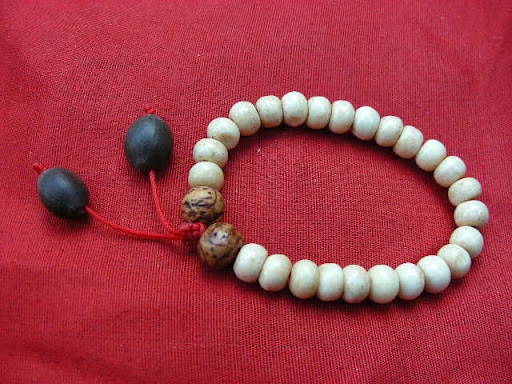
For me, a bracelet of skulls
Made of the bones of a water buffalo,
Dead of old age,
Alive on my wrist,
Whispering to me, always,
This ends. This ends. This ends.

More about Hanukkah?  Or Chanukah? More about Monks?
A New Set of Malas
Chanukah
Skeleton Dance

 
Leave a comment

Posted by on December 16, 2015 in Culture, Family, Poetry, Religion


Tags: , , , , ,

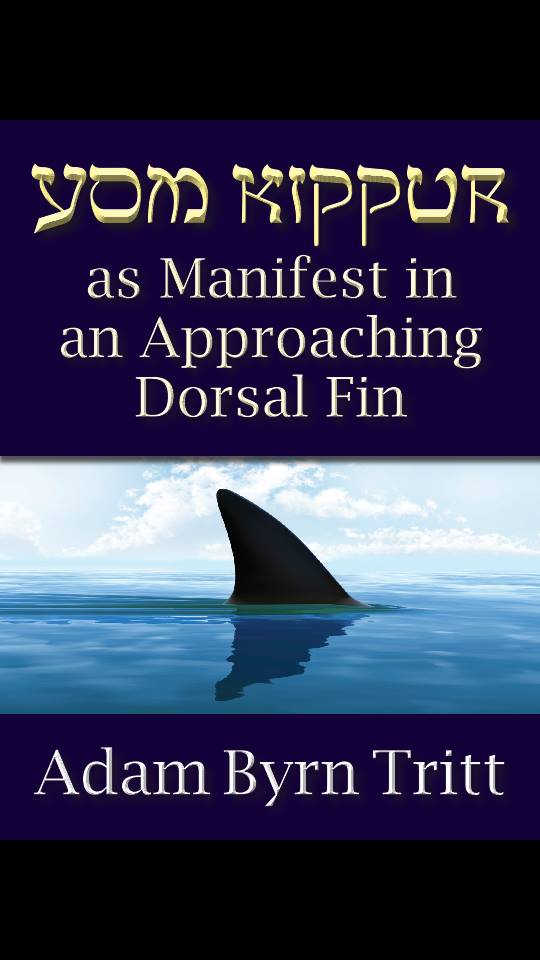
Win a Copy of my Newest Book : Yom Kippur as Manifest in an Approaching Dorsal Fin

Want to win a copy of my newest book? Of course you do.  Goodreads is holding a give-away for ten copies. Just click on this link.

From the back-matter:

“Whatever ‘the Jewish experience’ might mean to the modern reader, Adam Byrn Tritt’s approach is uniquely his own. He is ‘observant’ in the sense that he carefully observes, as you would expect of a man who is, at essence, a poet. As a self-described ‘Jewitarian Buddhaversalist,’ he is aware that each tradition illuminates the other. This collection of essays and poems provides us with good talk. Conversation is the highest artform, and Mr. Tritt invites us in most kindly, with insight, erudition, humor, and compassion.”

—Wayne McNeill, author of Songbook for Haunted Boys and GirlsImage

Yom Kippur as Manifest in an Approaching Dorsal Fin explores—in essays, poems, and creative nonfiction—the tension between cultural heritage and contemporary society, between religion and spirituality, between the family you inherit and the family you create. From early-morning wrestlings with God to portraits of three remarkably different family funerals, from Kabbalist chants at a pagan bookstore to the humorous “What Do Jews Do on Christmas?,” Tritt’s writing taps into themes nearly universal in today’s world in ways that will resonate with readers of all backgrounds and faiths—or no faith at all.

 
Leave a comment

Posted by on August 20, 2013 in Books, Culture, Family, psychology, Religion, Social


Tags: , , , , , , , , , , , , , , , ,

Preparing a Meal

(All life, every encounter, each moment, pleasant, unpleasant, “pure” or “impure,” may be transformed into a spiritual event. All life is tantra.)

Early evening.
Empty house.

I hear nothing
but the smooth separation
of snow pea from stem,
knife rolling against board
in rhythm,
and the low hum of the refrigerator.

Among the small piles of vegetables,
onions, mushrooms, garlic,
and a small hill of fish,
I discern origin from end.

All to become a meal
designed for how it will feel on the fork,
attract the eye,
appeal to the soul,
sustain the body.

Another day, another meal,
and
I am grateful
for the destruction and death
which precedes creation.


Tags: , , , , , , , ,

A New Set of Malas

I miss my bones.

As a sign of impermanence, of the temporary nature of life, few objects are better, more universally recognized, more viscerally understood than bones. As a sign we all come to an end, bones do it every time. The rich, important, beautiful. Loved and valued, we all end up bones. Bone.

Perhaps there might be some things, now that I take the time to consider it, to better represent the transitory nature of life than bone, but anything else I can think of, and I have never been short on imagination, would not be quite as understated as bone. Bone drives the point but can still appear clean and acceptable. Bone is body but not blood, flesh but not fleshy. It states itself plainly and clearly without comment. Understated. A bracelet of intestines would be noticed in the company of even the most impolite. People will talk. Wear one to your local grocery store or temple and you would see my point.

Bone.

Of course, there was the fellow I knew who made a necklace of his kidney stones. It seems like so much trouble to go through and the total cost rather exorbitant. It took him four bouts before he had enough material. Still, as far as custom made jewelry, how many people can claim to have created their’s from scratch? How’s that for being material.

But beads of bone. Unobtrusive. Understated. Inoffensive. Much less expensive than lithotropy.

And so, missing my bones and not wanting to use any of my own, homegrown material, I set out to shop for malas.

I had a set I had recently given up. They were a gift to me by monks from the Drepung Loseling monastery. Deprung Loseling has been around since the 1300’s. In the 1950’s the Chinese government destroyed nearly all the monasteries in Tibet including, Deprung Loseling, and left alive only two hundred and fifty of its nearly three thousand monks. This who survived escaped, walked though the Himalayan Winter to India, were welcomed and settled in the south of that country where they rebuilt from nothing.

For several years running, while I lived in Fort Lauderdale, the monks would fly in from India to come to town to create sand mandalas. Not just Ft. Lauderdale, of course. We were but one location in a tour of several months – a welcomed stop each fall. Each November the monks came to Piper High.

I was teaching English at Piper when the email call went out. They would be there, in our auditoriuam, nine Tibetan monks, and we needed to find them places to stay. We lived, myself, my wife, Lee, my daughter of eighteen and son of thirteen in a small trailer. I asked my wife is she would mind.

Lee was in medical school then and in class or clinic each day and spent her nights in study. On the couch, sci-I on tv, she was inside an oversized text of some four inches thickness each side when splayed open on her lap. I could see her body but her mind – her mind was in the book.

“Do you mind if we have some monks stay here? They will be at Piper and we are farming them out and…”

“Do you know how some authors write like they are talking to you? How they are easily understood because they speak to you as though it were a conversation? How even the most difficult subjects, like this, for instance, the physiology of disease, can be simple when written like that?”

“Yes”

“Well, this isn’t one of those authors. If you need to do something for school, do it. And would you get me some apple juice please?”

Excellent.

I agreed to house three or four of them. In two weeks they would arrive.

The day came. This person petered out, that person became unavailable, rides dried up. I arrived home followed by a van with nine monks from Tibet and one translator of questionable ability.

This was when I discovered what I had chosen to be unaware of. My wife had not listened to word I had said. It was, obviously, the lack of apple juice.

She made that very clear. After the shock.

They would be with us five days. It was Chanukah. That came to forty-five presents.

It is dinner
and Nine Monks from Tibet
are sitting down to lentil soup, bread,
halva, fresh cranberry tarts
and a steak.

One has just tricked another guest
into eating a fire pepper,
one has told an extremely unkind joke about the Chinese
(who can blame him?),
Lopsang is playing with my Wheelo®
(manufactured in China by twelve-year-olds),
Soman is tapping his forehead with a spoon
for nearly five minutes now
and Dharma is standing silently behind my son
ready to pull his ear,
again.

In saffron and cinnamon puddles
they pour onto the couch,
absorb into the cushions and
turn on the TV
wondering if the obvious
grand gestures and laugh track
mean the program
about two gay guys and a straight girl
is a comedy and
two are checking their email.

As the week ended, the last night came and the Rinpoche had learned the prayers, in Hebrew. for the lighting of the candles and would do it with us. It took ten seconds but the gesture, the effort was an honour for our household.


Barukh ata Adonai Eloheinu melekh ha‑olam, asher kid’shanu b’mitzvotav vetzivanu l’hadlik ner (shel) hanuka.
“Blessed are You, Lord, our God, Sovereign of the universe, who has sanctified us with Your commandments and commanded us to light the Hanukkah candle[s].”

Barukh ata Adonai Eloheinu melekh ha‑olam, she‑asa nisim la‑avoteinu ba‑yamim ha‑heim ba‑z’man ha‑ze.
“Blessed are you, Lord, our God, Sovereign of the universe, who performed miracles for our ancestors in those days at this time.”
He then led three monks in a prayer for us. That took five minutes. And the presents. Dreidles and chocolate gelt, whistles and small toys.

My daughter was offered to come to India and paint tankas. They had been amazed at the collage tanka she created of magazines, shower curtains, old shirts and beads. They gave her an invitation and a Khata – a white silk scarf of welcoming, goodwill and compassion.

To my son they gave a khata as well. My wife, a khata and prayer flags and a picture of our monks at their monastery. OUR monks, I say, as the Rinpoche told us, from now on, they would be our monks. To me they gave a khata and wrist malas of yak bone.

Rarely did it come off. I used it to breath. To meditate. To count beads on when what I thought what I really wanted to do was throttle someone. When a student or administrator was, in the depths of my mind, being separated neck from torso, I would be smiling, in seeming equanimity, counting beads. After a few bones had slipped between my fingers I knew I really didn’t want to throttle anyone. Everyone thought I was so happy.

It would come off when I was mowing the lawn, digging the garden, washing dishes. When I felt it might get caught on something.

After a while it started to slip off on its own. But so had my watch. So had, for that matter, my pants. I had lost a good bit of weight and the malas needed to be smaller if I was going to keep them in use.

I tied a knot in the cord. It didn’t hold long. I tried to restring them but that didn’t work: the cord would not hold, the knot loosen, the malas slip off. I brought them to bead shops and they seemed not to know what to do with them either. I even showed them pictures but each shop I left, baggy bones clanking around my wrist.

Then Carol visited. She brought with her a necklace for me, beads, done beautifully. Her new hobby. I showed her my malas, let them fall over my hand and into her lap. She thought she could fix them. No problem.

Carol lives in Boynton Beach. That is in Palm Beach County, Florida. I am a little under two hours north of her. My malas went on a trip to South Florida.

I thought it fitting. They are, after all, a sign of impermanence. Nothing lasts. But Carol is my oldest friend. Nothing lasts, ‘tis true. But friendship, in the span of a lifetime, is as close to permanence as one can get. A strong, close, real friendship. The malas of impermanence fixed by one of the most permanent things of which I know. A friend. I let them go.

That was about a year ago.

I miss my bones.

Time to go shopping.

While in Asheville, I looked. While at Pagan gatherings, I looked. In Austin, I looked. At gem and mineral shows I looked. In New Age shops I looked and was frequently lambasted for wanting bone by shopkeeps playing holier-than-though with Tibetan monks. I found nothing.

On eBay I found plenty but nothing that struck me, nothing that spoke to me, called me.. It would need to be something I found in person. After all, the last set was a gift. It was the universe telling me a truth.

I was thinking to myself. Ruminating. Circular. Maybe I just need to be patient. Maybe a set will come to me. Maybe I don’t need them anymore. Maybe I am playing monkey in the middle with my mind; what is being tossed and doing the tossing the same thing. Maybe… What is that? It’s them. There they are.

I had looked up bone malas on the Internet. I am not sure why I did this after having decided to forget about them. Perhaps it was a discussion that morning with the Abbot of the local Thai Temple, Wat Punyawanaram.

I was there for the festivities commemorating the opening of the new monastery, for the blessing of he grounds by the community and the blessing of the community by the monks, for the long period when monks do not leave the temple and the laity gathers to bring them the materials they will need for the coming year.

I was there with several people from our local Unitarian Universalist Church. We had raised enough funds to supply the monks ten sets of robes and it was my honour to present several of them during the ceremony. I sat with the abbot in a large sanctuary, peopled to capacity, feeling very comfortable – uncommon for me. But I walk into a Buddhist temple and I feel immediately calm, at peace and at home. He asked how my meditation was going. I imagine that is what he said. He speaks only slightly more English than I do Thai. I speak no Thai.

He had helped me quite a bit in the last year as I worked teaching, feeling as though I was forcing students to do that which they did not wish, feeling as though I was doing harm, at odds with my vows. I understood him. Common spoken language or none, it did not matter.

And, suddenly, I missed my malas.

Open Google. Malas bone wrist. I found several pages that felt unsatisfactory. I expected nothing. Then one struck me. What I noticed first was the different materials, seeds and beads and stones and bones of which malas may be made, were explained. Here was a person who understood why I wanted what I did. Secondly, it was set up on a blog. A catablog! Ingenious. He even included a video of what malas were for and how to use them. This deserved a further look.
I found what I was looking for, almost. I found a price I could well afford and it was so terribly close to my birthday I didn’t experience my normal need to resist my own wants and trivialize my own desires. Oh, who am I kidding? Of course I did. But the perfection, price and proximity of my natal day won and nearly sealed the deal.

What did I do? I hesitated. I wrote him from a link on the catalogue. If this was anything like most email communication, and I was sure it would be, I would log yet another birthday past this present one before I seeing an answer. But here was a man making malas. Making them as they were ordered. For specific people. Not beads sitting in a case. I had to try.

It was 4:22 on a Sunday evening. Here is what I wrote:

Hi,

I was looking at your page and was wondering if I had missed, or if you could make, a bone wrist mala?

I am looking for yakbone with the pulltie as opposed to elastic (which keep breaking). I guess they would be 27 or 18 beads. I’m note sure of a lotus seed or bodhi seed could be incorporated.

Thanks,

Adam

The answer, by email standards, was nearly immediate. It came in the early evening and included links and suggestions as well as an offer to answer any question I might have. So, at that invitation, I replied and questions I had. Can this be used, can that be used, will the bone change colour as I wear it (I hope so), can I change the string colour? I wrote, further:

I do wish there were a way to work the bodhi seeds in as well as the Lotus seeds onto the ends/tassels. Perhaps the last two beads before the slipknot bodhi seeds and the tassel-ends lotus. If not, I would prefer lotus.

I want the bone for impermanence. I want the bodhi seed to remind me to sit, to remind me there is nothing to be done about that impermenance. I want the lotus seed so I can remind myself I need not be mired in this, that beauty comes from the mud. I want. Maybe it is because I am an American., but I am suddenly presented with a choice and I choose not to choose.

His reply:


Sure. That sounds like a plan. Bodhi will be the last two at the slip knot and the tassel beads will be lotus. On thick red string. Perfect! The bodhi may be of a different size but not TOO different.

The bone does not get darker as time goes on…the oils from your skin will give the bead a translucent quality to the beads over time Great. Would you like a pic of the wrist mala to be sure you are happy with the design before it gets shipped tomorrow?

Thank you.

A picture? A picture? Was he serious? And not ten minutes later that is what I got.

And then we were positively chatty:

The mala looks incredible. I can’t imagine not being happy with them.

I spent the day at a Thai Temple. The only game in town, as it were, and where all the Buddhists tend to go regardless of being Thai, Tibetan, Cambodian, Chinese or from wherever. In my talk with the abbot I was reminded how much I missed having my malas.

So thanks so very much.

Adam


From: Destination OM – Custom Malas [mailto:destinationom@yahoo.ca]
Sent: Sunday, July 29, 2007 11:34 PM
To: Adam
Subject: RE: Bone Wrist Malas?

I learned my craft in Bodhgaya and make malas for many traditions. It is a blessing to serve practitioners and in turn help support friends throughout Asia. I collect supplies by traveling to Asia and hire friends to purchase supplies for me later. I make all malas here on Saltspring but will be returning to Asia for one year in November and will be making malas in Bodhgaya in April next year for six months alongside my teacher to learn more about the craft.

Actually today is the most auspicious day of the calendar year to purchase a mala as it is GURU PURNIMA (The full moon of the guru) and on this day we spend the day reflecting on the guru and connecting ourselves to the infinite wisdom. I spent the day with a Rinpoche who blessed the malas and wrist malas so you are triply blessed today 🙂

Thank you for the payment. This will go out tomorrow.

And it did. And it arrived today, seven days later.

It is in a yellow package. Eight by five inches. It is oriented vertically and labeled “Small Packet Petit Paquet” The entire package is labled in English and French. The return address tells me it came from Saltspring Island, BC in Canada. My address is below it, highlighted in yellow.

Immediately below my address is a space for the listing of contents. It says “Buddhist/Hindu Rosary. On the next line there is a star and the words “Made in Canada.” Below that, a star and the words “For religious purposes.” Everything is in capital letters. It arrived at about four this afternoon.

I didn’t open it. I opened the package from Bookmooch. I opened the DVD from SWIM. All this with the sealed package beside me.

I read the article in Poets and Writers titled “Will Write for Free: Why Is Asking to Get Paid So Difficult?” by Steve Almond with the still-sealed envelope inside the folded magazine.

I had tried to open it. I began, gingerly, to pull back the adhesived fold. It started to give with little pressure and I stopped. I simply could not. Not until I… Not until what? Not until I wrote about it. And now I have. Seven hours or so later, I am here, at the end of this essay. This envelope and me. And now I will open it.

I reach my hand in. They feel cool. I pull them out slowly. They are gorgeous. I can’t wait to sit, to count, to breath.

All there is to do now is to say “Thank you.”

Thank you.

 
5 Comments

Posted by on August 16, 2007 in Culture, Poetry, Religion


Tags: , , , , , , ,

Yom Kippur as Manifest in an Approaching Dorsal Fin

It is Yom Kippur. A Monday. I have taken the day off work to walk, meditate, think. I have taken the day off work so I could go to temple the night before and not worry about the time, the hour, how late it was getting, when I would need to get up.

We asked our friends to go with us. In our back yard, playing with clay, our conversation set on cognates and religion. I mentioned the Buddha of compassion, Amitabha, and the other name for him, Amida. How the Amidah is the name of a prayer of compassion during Yom Kippur. How it relates to the fruit, almonds, as the ancient Hebrews saw the almond as a symbol for watchfulness, promises and redemption. How the part of the brain which we know to be the seat of our ability to see things in a global, compassionate way is called the amygdala, from the Greek ‘amugdale,’ meaning almond. Craig started talking about the Kol Nidre prayer and, being Craig, translated it for us and we sat, transfixed, as often we do listening to Craig. Lee, Evanne, Beth and I, listening to Craig.

Of course we listen to Craig. He, translator of dead languages. He, who juggles biblical text back and forth from language to language, from meaning to meaning as though the passages are but palm-sized bean bags. He, of the three books of translations. Yes, we listen when he speaks.

As we talked, we discovered he had never been to temple, had never actually listened to the Kol Nidre. Neither had Beth nor Evanne and that, of course, was not a surprise, growing up in the Midwest: Ohio and Nebraska, Methodist. Right then, we asked if they’d like to go with us this Yom Kippur, to the Kol Nidre service; the only one we go to.

They were surprised. Craig said he was honoured. Evanne agreed with a clear look of shock on her face. Beth asked if we’re sure it was ok and told us how special it was to be asked; how appreciated it was.

That was months ago. We asked the small, local temple if we could come and bring three guests. No problem. May we have their names and do they have any departed they would like Yizkor candles for? Yes. We were set to go.

Erev Yom Kippur arrives. Lee is under the weather and cannot go. She asks that I go anyway and I resist but she does not want to disappoint our friends.

Evanne worries whether she should have her hair covered. Beth is concerned she looks like a ‘goy.’ Lee tells her, jokingly, that she should proudly announce she is a shiksa. I suggest against it and let them know it is an honor that they are going and the congregation would be overjoyed they are there.

They are worried. No need to dress well; not for this congregation. But they do and Beth’s heels put her so high above me she has to bend over and I must tip myself up on my toes to kiss her on the cheek.

Both wear black, notice their shoes are made of leather, point out they have worn black and now discover the color of the holy day is white. No-one will be following all these rules. No-one will notice.

Evanne, married, wears a scarf on her head, long and flowing, tied into her hair, nearly as long, nearly to her thighs. She could be Golda and Tevye’s shorter, forgotten daughter. She could be from the shtetle. No-one will guess she isn’t Jewish. Beth actually looks Jewish and no-one tells her this. How to explain what that looks like?

Craig fits in perfectly but is wearing shoes for the first time in, perhaps, more than a year. I offer him one of my tallit (prayer shawls) and a kipa I think will fit him well, gold and silver. He tells me he is honoured to be invited and I am privileged to give him my tallis to wear.

We arrive, are greeted, take prayerbooks and I search for a large print version, find one, enter, find a place in the pews close to the front. Myself, Evanne, Beth and Craig. I leave space to my right, where Lee would sit, where I would be able to see her.

We talk, discuss translation, Craig notices the Kol Nidre is not translated literally and, a game of telephone, shows me the text clues by showing Beth who shows Evanne who shows me, differences in font, serif versus sans serif, that tell a careful reader what is a translation and what is a paraphrase.

This congregation, Mateh Chaim, has, as yet, no home. And, yet, we have been welcomed even though we swell their ranks and available room. Even though there are non-Jews among us who need not be here. The congregation is growing and hopes to have one, but there is, in thoughtful congregations, a balance between the need for a building and the needs of community; the understanding an edifice takes money many of the people here tonight don’t have. It is the only congregation in Palm Bay. It meets tonight in a Methodist church. Behind the portable ark, containing the Torah, is a twenty-foot cross. It is not the building that makes a congregation.

I do not mind this so much. We talk, quietly, as we would before any service. Evanne tells us she is glad to see me misbehaving as usual as it puts her at ease.

Misbehaving? I ask. She answers I have said ‘ass’ twice since sitting down in the pews. She says it like this: “You said a-$-$ twice since sitting your a-$-$ down.” Silly. Anglo Saxon not allowed for a Methodist?

I think, momentarily, of our Yom Kippur in North Carolina. We were alone. No-one around us had an understanding. I listened to Kol Nidre on Internet Radio.

Joel Fleishman had a similar experience on the television program Northern Exposure in an episode called “Shofar, So Good” (1994) when, on Yom Kippur, he was visited by Rabbi Schulman. Our program opens with Joel, physician to Cicely, Alaska, carbo-loading in preparation for his day of fasting. He is attempting to explain Yom Kippur to the ever-interested residents as they eat at The Brick, the inn and tavern, and has little success. This is mostly because he has only a tenuous, superficial understanding himself. He knows the words, he knows the rules and proscriptions, takes care to keep the fast, not wash, not to care for personal convenience, to give the day up to feeling keenly, sharply one’s place in the world and relationship to God and our fellows. He sees the holiday as a noun with a set of rules, not a verb with a set of tools. To Joel, it is no longer a living tradition and he does not know what to do with it. On top of this, he is lonely for those who know his tradition.

Our Good Doctor Joel, while in the midst of his fast, was visited by the Good Rabbi Schulman who, as surprised as Joel, was lifted by a shaft of light and deposited in Cicely to help Joel understand what Yom Kippur is really about and Dr. Fleishman begins the process of making amends. It is a journey, a Hebrew Dickensian vision quest, which starts with the Good Rabbi occupying the space of the top head of a totem pole. Jews, after all, are tribal too.

Not too surprisingly, the members of the cast who understand Yom Kippur best are the shamans.

But I am not alone and I revel in this. Craig tells us the history of the Kol Nidre. The actual translation, the ‘Kol Nidre Controversy’ surrounding just what the proper place and ramification of the prayer is.

Kol Nidre means “All Vows” and it absolves us of vows and promises made that we needed to make to survive but knew were wrong. It apologises and gives release from the many times we said Yes when we wanted to say No, but did not because our jobs, food on the table, roofs over our heads, our safety, our security meant we had to say one thing, do one thing, when another was what we knew was proper.

He explains, my teaching middle school is my Kol Nidre. My giving grades, requiring students to do what they have no desire to, that is my Kol Nidre. When I teach them to pass a test when they want to learn creativity. That is my Kol Nidre. When I do that which I must to put bring food and security, when I do not call those around me on their actions because I must protect my job, that is my Kol Nidre. When I do not, can not, must not act in accordance with my true self; my Kol Nidre. When I do something I must instead of write and create. Kol Nidre.

Evanne points out that is exactly what the abbot at the Thai Buddhist temple told me, that I was doing what I needed to and need only recognize that and the needs of fitting into our community and of survival and taken into account in the realm of Karma.

Yet, even those vows I take seriously. I uttered them. And so the Kol Nidre also protects us from ourselves; we make this prayer because we take vows so seriously we consider ourselves bound even if we make them under duress or in times of stress when we are not thinking straight.

The Rabbi, Fred Natkin, walks up to the bima (stage) and we look around. No fashion show here. Women in pants, men in dungarees, vests. Hats instead of kipas. I have done this as well as it is more comfortable, does not fall off, shades my eyes when reading. Many women have Tallit and that is a sure sign of a rather liberal welcoming congregation.

The service starts and it is with great participation of the congregation, coming up to the bima, sitting down again after hugs and kisses. Always each moment, each prayer ends with hugs and kisses among all those on the bima. Evanne asks me if this is important. Among many liberal congregations, this is common, important, this contact and affection. I say it is a fitting way to end a prayer to love each other and who are we to argue, and I lean over and kiss Evanne on the cheek.

The congregation prays, meditates, responds, the rabbi sings, chants.

The time has come for the sermon. The rabbi speaks of science fiction. Reads a letter written by him to the neighbouring Moslem congregation offering aide and friendship after a shooting into the mosque this week. He is offering for the descendants of the two sons of Abraham, the children of Isaac and the children of Ishmael, to make peace and fight together for justice. The Jewish high holy days and Ramadan started the same day. We have the same goals. The president of the congregation writes his thanks, appreciation and friendship in a letter to the newspaper, thanking the rabbi and congregation. He reminds us we must make the world the heaven we wish it to be. It is our job and what we are chosen to do. That we do not pray for peace, but pray to be peace. That Judaism is a religion of verbs. The prayers re-commence.

The Kol Nidre is sung. There are two tunes for this prayer. I was taught by a rabbi there is magic in the tunes themselves, in the music, so, if one does not know the words, hum, dai de dai, la la la, and that is good and will do the trick. But I want to sing and this is the other tune, the one Lee knows. It is the Sephardic tune, I believe, the one from the Mid-East and not the Ashkenazic tune of Eastern Europe and Eurasia. I do my best. Craig knows the words but does not sing, unfamiliar with the tune even more than I. Evanne, somehow, reads more loudly than others, seems to fit, sounds clear and I am frequently amazed by this.

More prayers, meditations, the Amidah and call for compassion. I feel this prayer as I did the Kol Nidre and look for my wife, see the empty space. I think of my own Yom Kippur Prayer. And when I have trouble following along, I recite it to myself:

We open our mouths to proclaim how beautiful the world is, how sweet life is and how dear to us you are, Lady, Mother of All Living.

We stand here today to remind ourselves that we are all part of this web of creation. We are all linked, so that what any of us do affects all of us, and that we are all responsible for the Earth, and each other. We have chosen to be here today as a symbol of our commitment, our awareness of this connection.

Even so, we forget our promises and our duties.

We gossip, we mock, we jeer.

We quarrel, we are unkind, we lie.

We neglect, we abuse, we betray.

We are cruel, we hate, we destroy.

We are careless, we are violent, we steal.

We are jealous, we oppress, we are xenophobic.

We are racist, we are sexist, we are homophobic.

We waste, we pollute, we are selfish.

We disregard the sufferings of others, we allow others to suffer for our ignorance and our pride.

We hurt each other willingly and unwillingly.

We betray each other with violence and with stealth.

And most of all, we resist the impulse to do what we know is good, and we do not resist the impulse to do what we know is bad.

All this we acknowledge to be true, and we do not blame the mirror if the reflection displeases.

Lady, help us to forgive each other for all we have done and help us to do better in the coming year. Bring us into harmony with the Earth and all Her ways.

So mote it be!

In this prayer, we admit we are not perfect and proclaim we will make good on our mistakes even if we are not aware we have made them. We all make such mistakes. Such is the friction, the dukkuh as the Tibetans call it, of life. And we must have the compassion for others to apologise, to make amends, person to person. If we do not, we cannot go into the new year. If they do not accept, the guilt is on their heads if, and only truly if, we have honestly done our best to make amends.

We must also have compassion for ourselves and the ways we have transgressed against ourselves. Such is the message of the Amidah and Kol Nidre; we can start over and do better. Such is the message from Amida, Amitabha.

And we are cognizant we have made mistakes we are unaware of individually. For these, we say a prayer and ask forgiveness not of God, but of each other and offer our forgiveness as well.

More meditations, kisses, hugs. The Mourner’s Kaddish and I quietly remind those with me this is what they gave those the names of the departed for. I think of those I have lost and feel keenly the empty space next to me, where my wife should be, and move slightly over more, closer to Evanne, leaving more room for my absent wife as though I was looking to be able to see her as I sang, but could not find her. I am missing her and think, sadly, at some point this space will be open, open and empty and not fillable. Thus says this prayer.

And with this, service ends. Craig mentions how so many of these prayers have been taken, nearly without change, for Christian services. Beth feels the continuity with the Methodist services she is familiar. We exit, putting our books back as we do, and head back to the house.

Lee greets us outside still not feeling well but wanting to be social to a degree. I am grateful, and tell my friends so, that I was able to go to temple with those I love even when my own dear was at home. I was able to share this evening with them, this prayer, this holy day. I am grateful to them and happy.

They had said it was an honour to be asked. That night they repeated their gratitude and surprise. It is I who am grateful. It is I who am honoured. It is I who am, again, surprised, amazed and smiling. I hold them both and say thank you, then smile as they drive away.

Today I stay home for Yom Kippur. I do not go to temple, however. I plan to write, run, walk, meditate, remain quiet.

I get ready to go to the beach. On days like this I am reminded of some of the perks to living in Florida. It is October and I am going for a run on the beach. My ancestors would already be cold, wearing thick coats and would have long collected the winter wood. I will be running by the waves wearing as little as I can get away with. I say to Lee, listening, that it is too hot to wear dungaree shorts, the only kind I have. I have two swimsuits, both old, hardly worn but seeming worn, nonetheless, elastics given up their ability to stretch, become brittle.

I have not purchased any in years and told myself I would not until my weight was down to where I wanted it. I might have to go back and revisit that idea. They were too small for years and I would not go to the beach. Now they are too big and are unfit, do not fit, I put on the one with the best elastic. My wife shakes her head. No? Why not? Does it have a lining? No. She tells me I have lost weight and that will lead to needing a lining if I am planning on going running. She does not want me to be uncomfortable or, worse, injure myself, telling me the fat I use to have kept some things in place and, without that weight, I’ll want that lining as I go jangling up and down. I put on the other suit and it falls off. It has a cord, I pull it tight. It still hangs a bit and I’ll need a new suit soon.

I go off to Melbourne Beach and leave everything, including my sandals, in the car. Keys, wallet, glasses. I put about fifty cents in the meter and get one hour and fifteen minutes for my coins. I did not take sunscreen so I leave my shirt on, planning to take it off if I get too hot.

It is bright, clear, brilliant and the beach is quiet and nearly empty. I head to the shoreline and walk, briskly, south.

I practice an exercise as I go called the Walk for Atonement. At-one-ment, removing separation. Becoming one with what is around me, with the world and all that is in it. With time and space. If we felt at one with all things, who would we, who could we, hurt?

What is our place in this world? What is our place, in context to all that is? I walk. With my steps, I contemplate spans of time. A day. What does a day feel like? What does it feel like to exist a day? A year. How does a year feel? Ten years. Can I feel ten years? How plastic I am. How much one can change in ten years.

I do this every year. From then to one hundred. This year, I add fifty years. Fifty years. I am approaching that and can feel it. It is not far beyond my span now and I can understand that in a personal context. One hundred years. What does that feel like? I have and had relatives nearly that old. One thousand years. I can understand this historically but what does it feel like? I am uncertain. My place in it is, or can be, nearly a tenth. But how much a part do I actually play? My grasp on it is tenuous. Ten thousand years. Again, historically, I have an idea. Personally, it is too vast, too long. I have no context. What is my place in that span of time? Nearly none. One hundred thousand? None. None at all. A million?

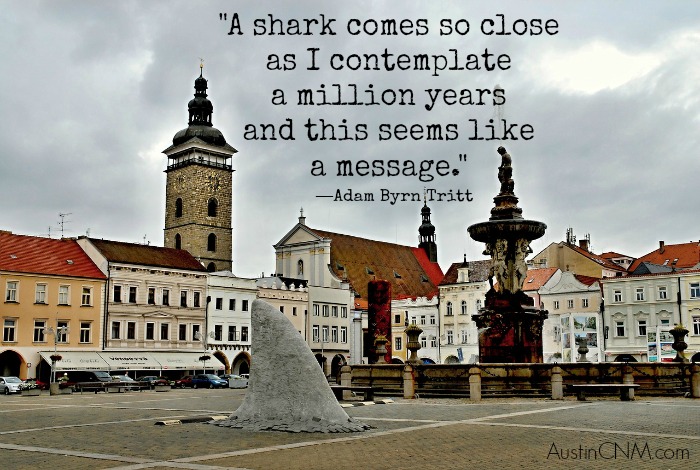
yomkippurshark_acnmAs I reach a million, I see something I have never seen but which is astonishingly familiar in the water a scant twenty feet from me: a triangular dorsal fin, a triangular tail fin, both moving gracefully in the water so close if I wanted to, if I were fool enough, I could walk out to it and barely have my calves half covered by ocean. This is amazingly close for a shark.

I stand and watch. This is an interruption in the flow of the meditation. Or is it? A shark comes so close as I contemplate a million years and this seems like a message. It feels like a hello from distance of time and I can see, now, what that million years looks like. I cannot go to it so it, instead, has come to me. Today.

I am aware of a person next to me, fewer than a few feet away. “Is that what I think it is?”

What else could he be asking? It is safe, I imagine, to answer in the affirmative. “Yes.”

“I was going to go swimming.”

“Still going to?”

“I just moved here. This is my first time at the beach. Are they out there all the time.”

“Are you asking me if there are always sharks out there or if death is always fewer than twenty feet away and swimming around us.”

He stares at me.

“The answer is yes to both. You’re just getting to see it today. Welcome to Florida. If you plan on hiking instead, remember, we’re the only state with all four kinds of venomous snakes.”

He walks off.

I continue my walk. With each step I think of a person I have wronged. I apologise. With the next step, I forgive myself as well. I do this until I can think of no more people but I am human and I must have hurt more people than I think by simply the act of living. I apologise, with each step, contemplating the many ways we hurt each other and never know it, cannot help it. And, when this is done, forgive myself.

As I continue to walk, I think of each person I know has hurt me. I forgive them. It no longer matters. In the span of time, what could it matter? If they have not admitted guilt, what does it matter? I forgive them. I forgive them all. If I have thought badly of them for the wrong they have done, for this, even, I apologise and forgive myself.

Why carry guilt? Why carry anger? Why carry a careless word? Of what use is it in the span of years? A million years and how long am I here? There is a shark in the water.

Gate gate paragate parasamgate bodhi svaha. Gone, gone. Beyond gone. Past beyond gone. There is enlightenment.

I start to run. Barefoot I pad the sand beneath me. Step by step following the mean line of the surf. If the waves come in further, I lift my legs higher, pull up my knees, splash as each sole descends. This varies my running, changes the muscles used, increases my activity.

With each footfall, I think of a year of my life. A year. Each time I pad the sand beneath me; grains millions of years in creation, millions in erosion. Each step, a year. I run out of years quickly, in a matter of half a minute. I think of my potential lifespan and run them out in another half minute.

I think then of the people I love and run them out, each step a year of life. My family, less than a minute each, like the blink in time they are, we are. My friends, a minute. I think of those I know, enjoy the company of, gone in minutes and I do this consecutively but I know it is all concurrent, all gone, more or less, in the steps it takes me to run out mine. I think of those I don’t like. All gone too. No different. All the same. We are a set of footprints. We wash away.

I wish all people happiness and the root of happiness. I wish all people freedom from suffering and the root of suffering. Even those I don’t like. Especially. Now, before I become invisible among the sands. Now, before I wash away.

I have run out of people. I have not run out of beach. I continue, watching the evannebirds skitter the foamline as I splash and make impressions which are instantly gone behind me as the tide washes out. I run and am not tired. How much further?

I expected to run for a few minutes. I thought, how long can I run before I need to turn back? How far can I go before I know I am half-spent and turn around to run back or all spent and must walk my way back? But neither point comes. I run.

I run easily, no pain, barely sweating, my heart slow, my breathing calm. It was not long ago I would run five minutes and be exhausted. I would run and walk and run and walk in alternate minutes. Now I am easy and feel free and comfortable, open. How long have I been running?

I choose a point in the distance; a home among the many but different in colour than most and decide to run to that, then turn around. On the return I can sense no reason to be heading back but my desire to return to my writing. Still, I am not tired, not worn, my breathing slow and full.

I see the salmon hued building that signals where I started. There is the boardwalk, invisible behind the sea oats and dunes. I run up to the ramp and there I stop.

Once to my car, I look at the meter. I have been gone more than an hour and a quarter and it flashes at me. I have run for much of that time. I have run for nearly an hour. It is not a marathon, but it is an amazement, an accomplishment and I have a sudden keen sense I have not eaten anything today but half a cup of milk. I am not fasting. I cannot fast. It is bad for my health and is, therefore, forbidden by Talmudic law. Certain people and people under certain conditions, according to the Talmud, may not fast. I have brought nothing by way of food with me and across the empty street is a Coldstone.

I get my things from the car, brush off my feet, put my sandals on, put another quarter into the meter and walk over. What could make this day more perfect than adding an ice cream?

There is a Starbucks, on one side of it and, on the other, Bizarro’s Pizza. There use to be café here Lee and I ate at once; had lunch with Jeannie, Joseph, and Connor on our first visit to Melbourne. It left with Frances, or Wilma or one of the September storms to visit in 2004. The building is still empty, partial.

I walk into Coldstone. It is slightly after twelve and it feels as though there have been few customers today. I ask the young lady behind the counter for plain ice cream with no fat and no sugar. They have ice cream with no flavouring; simply the taste of milk, crystalised, thick and solid. No sweetener. Why would milk need sugar? She is happy to oblige and what size? One cup. A small.

Would you like anything in that? No. Wait, yes.

Please, if you would, some almonds.

 
7 Comments

Posted by on October 3, 2006 in Culture, Religion, Social


Tags: , , , , , , , , , , , , , , , , , , , , ,