RSS

Category Archives: Family

Hair

I don’t know why I’m reading this tonight. Maybe it is seeing my kids after a year absent – seeing in the light of their eyes the omnipresent brightness of their mother. Maybe it is Sadie asking her questions, continuous, into the deep morning. Maybe it is part of the work of grief, the carrying of the weight in the dark to the mountain-top that is never reached.

Of everything I have ever written, this is the one I think of the most. Not the longest, by far. Maybe nearly the shortest. But the one that lives on my mind.

I was asked, by Murshida VA, what three things would I have someone know about grief.

I took a day to answer, then three things came at one. It has no schedule. It doesn’t end, or heal. One simply incorporates it into one’s life – a wound, a laming, to which one adapts, with which one lives, from which one learns, and with which one may become stronger. It cannot be controlled, anticipated, prepared for – it will be different each time and come in different ways. I will now add a fourth. It is the price of love – never shut it away and you will be able to love more, and again, and see love in all things. Those who cannot grieve cannot return to love, cannot return to grace.

Adamus's avatarAdam Byrn Tritt

I had pulled the car out of the garage and set up a chair.  Months earlier I had purchased a Norelco family hair cutting kit, and electric razor and attachments, for next to nothing at a garage sale. I had no idea why, but I brought it home, and now, now, it was plugged in and ready to be used.

The chemotherapy had left your hair in clumps.  It fell into the shower drain, left bits on the pillow, left itself on the couch. Each bit that fell, you cried. I watched as you turned once, as I held you up in the shower to see your hair on the drain.  Out of the shower, you stood, facing the mirror, clutching at your hair, pulling it out in clumps, tears falling, falling into the sink with the strands from between your fingers.

Hats you didn’t like. The scarves you used…

View original post 559 more words

 
1 Comment

Posted by on June 24, 2016 in Family, philosophy, Social, Uncategorized


Tags: , , , , , , ,

State of Being

Verbs are words that show a state of being—present, past, future. Transient or continuous. When we use the verb “was/were,” we mean something that has passed. It happened in the past. It is done. It is over. When we use the verb “is/are” we speak of something that is present. Something that exists now, current. An action that is going on right now. This moment.

For the purpose of my question, tense is not important. Past participle, continuous, perfect—none of these important to my question. What is important are simple tenses. Past and present.  

And so I ask, why do we say someone is dead?

We can say someone is alive. To be alive is a continuous state. Continuous, until it ends, either abruptly, or slowly, slowly over a period of time. Suddenly, or counting down, day, day, day. One hand. A few fingers. Done. Present becomes past very easily.

Someone is alive. Then they are not alive. But they are not dead. If we insist on using present tense we should say something that is an actual ongoing state. Something that is active. Her body is in the ground. She is decomposing. Her ashes are disappearing into the snowy stream.

Death is not an active state. It is not something someone does. It is the end of doing. She is alive. She is laughing. She is loving. She is healing. She is holding your hand, raising children. She is putting her feet on the dashboard on a long ride, talking, laughing, singing. Under your hand, her leg is warm.

 
Leave a comment

Posted by on January 27, 2016 in Culture, Family, philosophy, psychology, Social


Tags: , , , ,

The Photograph

I remember a photograph
I never took.
I remember.
I remember taking it.
I remember taking this photograph
Of three Tibetan monks at Chanukah
Smiling over candles we had just lit.
Lee said the prayer,
The kids watched,
I looked on,
The monks beamed.

Staying with us, eight monks
Touring the United States
Making sand mandalas
Here and there. A week spent
tapping, rasping ground stone,
Rainbows into patterns intricate
And sharp, fine and beautiful,
Complex and ephemeral.
Done, and one prayer,
A sweep of the hands
Across the surface from
The four corners in and
Gone.
The candles lit,
One asked, as well as he could,
To say their own prayers.
Chanting, grinning,
They blessed the candles, our home,
and the time we have.

There were small presents.
For the kids,
Trinkets and such,
For the monks,
Halva, dreidels,
Latkas and applesauce and a
Chocolate coin for each one.
For Lee they had a kata
White and light and flowing.
For me, a bracelet of skulls
Made of the bones of a water buffalo,
Dead of old age,
Alive on my wrist,
Whispering to me, always,
This ends. This ends. This ends.

More about Hanukkah?  Or Chanukah? More about Monks?
A New Set of Malas
Chanukah
Skeleton Dance

 
Leave a comment

Posted by on December 16, 2015 in Culture, Family, Poetry, Religion


Tags: , , , , ,

Chanukah

Happy first night of Chanukah to 2.2% of the American population, and me too. I have many many wonderful memories of Chanukkah with my family. They had become sad. Watching Inside Out last night actually let me see those, visualise those memories in a different way. They are now blue and gold.

I was told a slightly alternative version of the story of the oil and the eight days. I was told this by a P’nai Or rabbi, David Zaslow of Ashland, Oregon. In it, God has nothing to do with the oil lasting eight days. Everyone prays for it to, but when the temple is quiet, people sneak in and add small amounts of the little oil they have. The poorest of the poor add what they have, and the temple flame remains lit, and spirit continues to shine. It has been said that God works through those who seemingly have nothing to give, so discount no one, take no one fro granted, feel there is no person without worth. Tikkun – the good works that make a heaven of the Earth. Perhaps there is a god who made us, but it is left to is to make heaven. Up to us to answer prayers.

I was reminded of this today by GiGi, Arlene’s Daughter, who said that there was a Santa Clause. He is all of us, everyone. And I remembered this story.

I won’t be lighting anything. I won’t be saying the prayers. That falls to Sef, my daughter, now. I can’t. It doesn’t feel right. But this still means something to me.

Bless you all. May your lights shine even when there seems to be nothing left. And, if it seems out, may the light return.

 
1 Comment

Posted by on December 6, 2015 in Culture, Family


Tags: , , ,

Collecting Stones

Collecting Stones

Today is the day I collect stones.

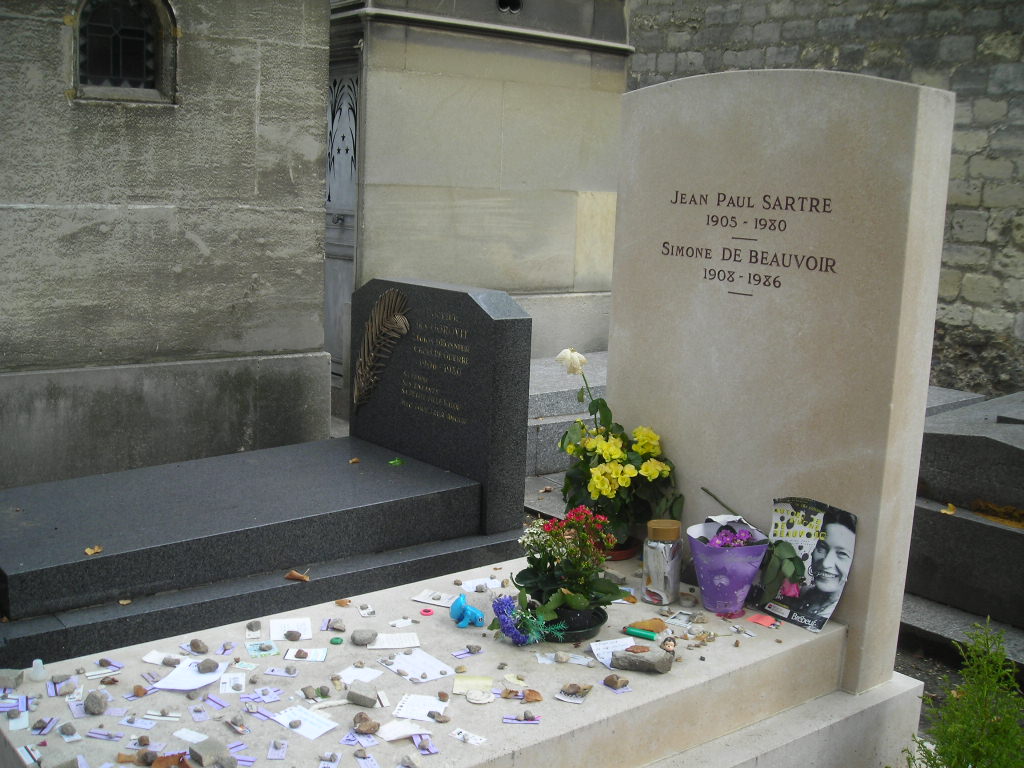
Years ago, far away, Jews, before they were Jews, back when they were a wandering tribe of anthropo-theists who believed in a single god they insistedGrave 1 was unlike any other, met the Canaanites, who believed in no such thing, before they merged, even back then, we buried our dead in the ground. At first this was in caves. Then, in the ground itself. In areas that were too hard to dig, too rocky, a body would be placed on the ground and stones would be heaped on and around the body. The community would bring stones and the more people who attended, the more stones would be piled. One could tell how important, or how loved, and they are not the same, by how high the pile of stones was.

Still today, the tradition continues. One can walk through a Jewish cemetery and see graves with stones on them. Someone comes to visit and leaves a stone. “I was here.” “People still care about this person.” Over srtre gravetime, the piles grow.

The Hebrew word for pebble is tz’ror—a word that also means bond. In the memorial prayer, El Maleh Rahamim, we ask the deceased be “bound up in the bond of life”—tz’ror haHayyim. By placing the stone, we show that we have been there, and that this person’s memory continues to live on in us, through us. And the practice is not kept to just Jews who have passed, but one may see pebbles on the grave of any beloved or respected. If you see pebbles, you know a Jew has been there. You know the person is loved.

Tomorrow I bury my father. Unlike my grandmother, whom I myself buried, my mother—and soon my father to join her—is “buried” in a supposedly waterproof concrete casket sunk in the ground over which a concrete lid is placed over which a marble lid is placed and secured with four large bolts. I shooed the workers away and secured the bolts myself. It was not the same, one shovel after another, but it was some closure. Tomorrow I will do the same.

bernstein graveWhat strikes me about this cemetery, other than the non-Jewishness of keeping a body from the elements, securing it from the waters, protecting it from the natural process that brings it back into the Earth, is this—a nearly complete lack of stones. Oh, the graves have stones. They are brought in, small ones, in pockets and handbags and baggies. But there are none to gather—as though the ground had been cleared, swept, scraped free. There should be a sign. “There will be no gathering of stones here. No. We have made sure of it.”

First breath. Last breath. In between, we collect stones.

And, so, today, I collect stones.

 
1 Comment

Posted by on July 6, 2015 in Culture, Family, Religion


Tags: , , , , , ,

Already It Is Too Long

Already it is too long 
For you 
To lie there 
With your one eye open 
Staring at nothing, or 
Something only you can see. 
I cannot quite tell 
If you are conscious but 
Incapable of movement, or 
Vacated so fully 
you do not even care to swallow 
However much we may plead. 
 
I ask how you are doing. 
They tell me facts - 
How many squirts of apple juice, 
How many half-teaspoons of pudding - 
But I don't want facts. 
Lives are not made of 
facts and measure and scales and 
What do they know? 
They didn't even know 
Which way to comb your hair. 
So we brushed it back and 
Now you look like you again and 
You can go now. 
Really. It's OK.
 
1 Comment

Posted by on July 2, 2015 in Family, Poetry


Tags: , , , , ,

Throwing Rocks at the Sun

Written with Sadie Amarina Tritt, age 4. My first collaboration with my granddaughter.

Throwing Rocks at the Sun

We can go to the park now,
And paint with our fingers on canvas sails.
We can dance now,
Tickle a ferret’s tummy until…
Do ferrets laugh?

We can plant flowers
And play with Grandma in the morning.
We can climb through the phone and…
Would we hurt the phone or
Would we hurt our noses?

Are doggies made of
Nothing but bone?
Can I see the pictures
When we get back home?
Tell me, do sea otters
Have bright big teeth?
What animals lay eggs?
What do they eat?

You and I,
We can go outside, and
We can throw rocks at the Sun.

 
Leave a comment

Posted by on April 28, 2015 in Family, Poetry


Tags: , , , ,

Seven Questions for Adam: An Interview by Craig Smith

Seven Questions for Adam: An Interview by Craig Smith.


Tags: , , ,

Silence

I have taken a break to grab some lunch. A small Chinese restaurant. A family of four sits across from me, one table ahead.

This is the family that typifies an average – a mother, a father, both middle aged, a daughter of late teens, a son nearly a teen or recently so.

Each eats without word, but the only silence is among them. Within each there is a shield of sound. Each has headphones on. Earbuds, full phones, hangers, and, for the father, Bluetooth speakers reminiscent of Uhura at the communications console on the bridge of the USS Enterprise. Each is listening to music. It bleeds beyond the headphones and earbuds, mixes into a pandemonic of sounds. Loud enough to carry the treble to my table of each individual island at theirs, as they listen, look down, fork, plate, food, mouth, plate, food, mouth, down, up, down, up, wordless, silent.

 
Leave a comment

Posted by on March 24, 2015 in Culture, Family, Social


Tags: ,

Listen

Listen.

A year ago, maybe less, maybe more, at dinner, a discussion.

It was an evening designed for people to get to know each other. I desperately wanted it to go well.  I don’t think it did.

One person talked while the other listened. One felt the other had no interest because she was not being asked questions.  She felt asking questioning was how someone showed interest in another. The other person felt the first wasn’t listening because she was asking questions but not hearing the narrative, looking for answers instead of stories. Both were exploring the other the way they felt the other person would feel valued and wanted, sure to feel the interest flowing.  We so often relate to others the way we wish them to relate to us, regardless of our different ways of being.

It didn’t work.

I am thinking of Guinan from Star Trek: The Next Generation. Played by Whoopi Goldberg, Guinan was long-lived and came from “a race of listeners.” She ran Ten Forward. Café, bar, meeting hall. She was a bartender, but, like the archetypal bartender, she was a counselor, psychologist, and, when her patrons needed it, when a crew member was confused, she listened. She listened long, and deeply, and, on rare occasion, cut through the morass of conflict and over-thinking with a single well-placed question one could only form after deep listening.

Guinan is the only action figure I own.

Some of us see our lives as points. Events. Memories.  Some of us as narratives, stories, chronologies with highlights. And we so often wish to learn about others in the way we see our own lives.

Maybe it runs in families. My son, he listens.  I can’t really remember Lee asking people many questions at all. She would know you or would not, and the facts rarely mattered. My daughter, Sef, too.

Arlene likes to ask questions, and be asked questions. It is how she feels one shows interest in another. It is also how she feels someone shows interest in her. Fair enough. They are good, solid questions. Questions of meat and bone. Helpful and direct. And she listens too, picks up on subtle things, notices nuance. Still, the questions have taken me a bit to get used to.

And I know she often finds my lack of questions befuddling.  Mine are few. I like to make them count.

Craig asks questions which are intense and probe deeply. It is quite a skill. He asks them with near surgical exactitude. He has noticed I take much delight in derailing his attempts at interrogation.

Trish asks rapid-fire questions and rarely waits for an answer before the next. I usually just stare at her until she stops.

Alicia rarely asks a question, but when she does, it is thoughtful, wide, and beautifully ambiguous, and I have to think to answer.

Susie. Other than “What are you doing Sunday?” “Can I put a load of laundry in?” or “Can I help?” has not, that I can recall, ever asked me a question.  But she knows me. She listens well. Yet, she, and others, know me. Each differently, for we are never exactly the same to each person we know, but, each in their own way, has come to know who I am.

We each have our own way, and sometimes those ways cross and we find we don’t quite know how to relate to the other person. It can take some adapting, some getting used to, some cutting of slack, as it were, and some understanding that we all relate to the world, and each other, in different ways.

As for me:

I want to discover you,
To listen to you,
Wander with you, ramble
The trails of your life
As your stories
Give away the who of you,
The how of you.

I want to press my ear to you
And sound the depths,
Hear the murmurings
Of desires and disappointments
And wander within the walls of you
Feeling for the edges,
The borders hard and soft.
See the flashes in the dark
stumble upon the permanent midnights,
Your heart, your soul.
The who of you, the how of you,
Even the why of you,
But the what of you,
If it should come clear
In the course of time, that is fine,
But I’ll not ask.
The data points and trivia of you
Will come as needed,
I’ll not ask,
You needn’t tell.
I know what I need to know.

Others will ask questions,
Probe, collect information.
It is their way to discover
What they feel
Is the measure of you.

But I say, come,
And let us walk a while.
I want to listen.

I love to listen to people ramble.  That is when I learn the most. As they go on, I learn their history, likes, dislikes, pet-peeves, I hear what makes them tick and what makes them sick, what makes the glow and what leaves hem cold. I hear where their heart is and where their soul resides. Rarely will I ask a question unless there is something I find confusing, or I see confusion and it occurs to me a question might bring clarity. But they are few. I want them to count.

Like Guinan, who stands on the sill over my computer, I want to listen.  Always listen.

 
3 Comments

Posted by on September 8, 2014 in Culture, Family, psychology, Social


Tags: ,